
At Container Man, LLC, based in Bolivar, MO, we’ve witnessed a revolution. The shipping container is no longer just a vessel for transoceanic trade; it has become the most versatile building block of the 21st century. Whether you are looking for the “Most Storage for Your Money” or planning a high-end architectural masterpiece, this guide is your roadmap to success.
1. The Philosophical Shift: Why Build with Steel?
Traditional construction is slow, expensive, and vulnerable. A timber-frame shed or office is prone to rot, termites, and fire. A shipping container, constructed from 14-gauge Corten steel, is a fortress. It is modular, meaning you can start with one 20-foot unit today and stack a 40-foot High Cube on top of it next year. This guide explores how to harness that industrial strength for personal and professional use.
2. The Anatomy of a High-End Workshop
A workshop is more than a room with tools; it is an ecosystem of productivity.
- The Power Grid: Standard residential wiring won’t cut it for a serious shop. We recommend a 100-amp sub-panel. Because you can’t easily run wires inside the steel walls, use EMT conduit. It gives the shop an industrial aesthetic and allows you to add outlets anywhere as your tool collection grows.
- Work Surface Engineering: The marine-grade plywood floors in our containers can support 60,000+ lbs. This means you can bolt down a 2,000-lb metal lathe or a heavy-duty car lift without a second thought.
- Lighting Science: Shadows are the enemy of precision. Install linkable LED shop lights in a “perimeter” pattern rather than just one row down the middle. This eliminates shadows on your workbench.
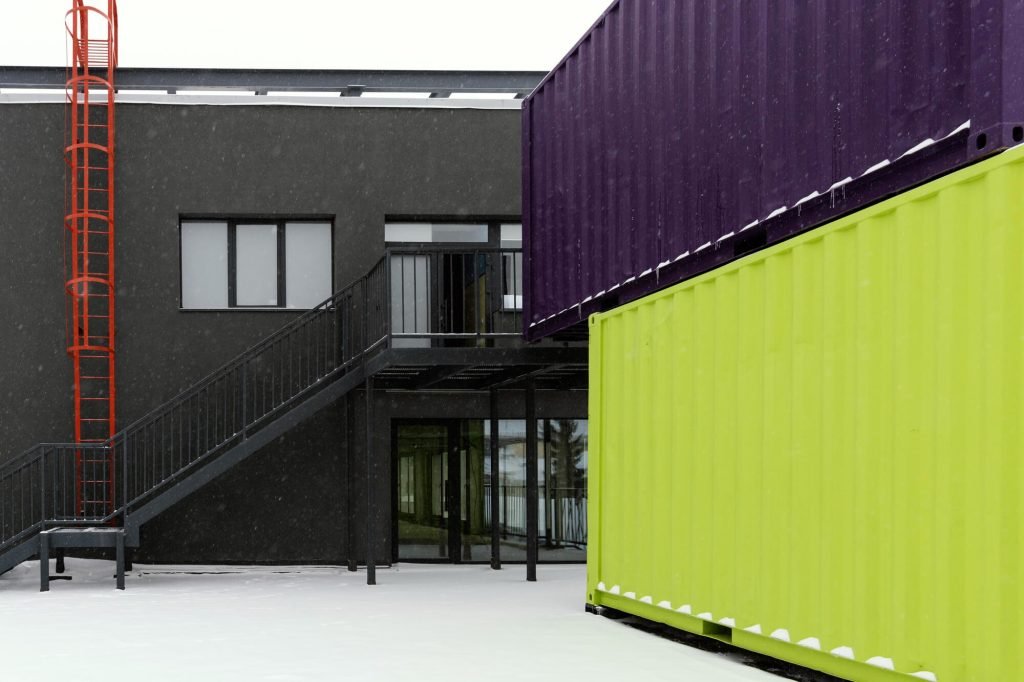
3. The Detached Executive Suite: Remote Work Reimagined
The home office is the #1 request we receive at Container Man. A “One-Trip” container provides a pristine, odor-free environment.
- The “Boxy” Problem: To make a container feel like an office, you must break the visual lines. Large sliding glass doors or “picture windows” are essential.
- Acoustic Management: Steel reflects sound. To avoid an echo on Zoom calls, use fabric-wrapped acoustic panels or “shiplap” wood walls over your insulation.
4. The Climate Control Challenge: Beating the Missouri Heat
In Bolivar, humidity and temperature swings are brutal.
- Spray Foam (Closed-Cell): This is the only way to insulate a container properly. It acts as a vapor barrier, stopping the “sweating” that happens when warm air hits cold steel.
- The Mini-Split Revolution: These units provide heating and cooling in one whisper-quiet package. They are incredibly energy-efficient and only require a 3-inch hole in the steel for installation.
5. Technical Welding and Cutting: DIY vs. Pro
Every time you cut a hole for a window, you remove structural integrity.
- Reinforcement: You must weld 2×2 or 2×3 steel tubing around every window and door cutout. This prevents the roof from sagging over time.
- The Plasma Cutter: For DIYers, a plasma cutter is faster and cleaner than an oxy-acetylene torch or an angle grinder.
6. Exterior Aesthetics: Curb Appeal and Longevity
- Cladding: If your HOA doesn’t like the industrial look, you can “wrap” the container in cedar siding, metal panels, or even stone veneer using “Z-girts” attached to the exterior.
- Paint Selection: Always use a Direct-to-Metal (DTM) industrial coating. Standard house paint will peel off a container in 18 months.
7. Conclusion: Your Legacy in Steel
A conversion project is an investment in your property’s value. At Container Man, we provide the highest quality raw material so your finished project lasts for generations.
8. The Interior Design Psychology of Small Spaces
When converting a shipping container, you aren’t just working with steel; you are working with a narrow, linear footprint. To prevent the “tunnel” feeling, you must use design psychology to open up the space.
- The Power of Light Colors: While industrial gray looks great on the outside, the interior should almost always be a high-reflectance white or light cream. This bounces the natural light from your windows throughout the entire 20-foot or 40-foot span, making the 8-foot width feel much more expansive.
- Verticality and Storage: In a container workshop or office, floor space is your most valuable currency. Utilize the 8.5-foot (or 9.5-foot for High Cubes) height. Install floor-to-ceiling shelving units and use magnetic tool strips. Because the walls are steel, magnetic organizers are a “cheat code” for storage without drilling holes.
- The “Long View” Strategy: When placing furniture or workbenches, try to keep a clear line of sight from one end of the container to the other. This visual “uninterrupted path” tricks the brain into perceiving the space as larger than its actual square footage.
9. Advanced Flooring Solutions: Beyond the Marine Plywood
The standard floor in a Container Man unit is 1.1-inch thick, high-density marine-grade plywood. While it is incredibly tough, a conversion often requires a more specialized surface.
- Epoxy Coating for Workshops: If you are working with oils, chemicals, or heavy automotive parts, a professional-grade epoxy floor is essential. It prevents liquids from soaking into the wood grain and creates a slip-resistant, “showroom” finish that is easy to sweep.
- Luxury Vinyl Plank (LVP) for Offices: LVP is the preferred choice for container offices. It is waterproof, durable, and provides a “residential” feel. It also adds a thin layer of thermal break between your feet and the steel sub-structure.
- Coin-Grip Rubber for Gyms: Transforming a 20-foot container into a home gym is a rising trend in Bolivar. Heavy-duty rubber tiling protects the plywood from dropped weights and provides the necessary grip for high-intensity workouts.
10. Plumbing and Wet-Pack Integration
Adding a bathroom or a kitchenette is the ultimate way to turn a container into a fully functional “ADU” (Accessory Dwelling Unit).
- The Raised Floor Method: Because you cannot easily dig a trench through the steel floor and the cross-members below, many builders create a “wet wall” or a slightly raised sub-floor. This allows you to run PVC drainage pipes horizontally to an exit point in the side wall.
- Greywater and Septic Connection: In rural Polk County and surrounding areas, connecting your container to an existing septic system is usually straightforward. However, always ensure your plumber installs a proper vent stack to prevent “P-trap” siphoning, which is a common issue in small-scale container plumbing.
- Tankless Water Heaters: Space is at a premium. An electric tankless water heater mounted on the wall provides endless hot water for a shower or sink without taking up a 2×2 foot corner of your floor plan.
When you are ready to stop dreaming and start building, come see us at 3251 S Springfield Ave. We’ll walk the lot with you, find the perfect unit, and handle the logistics so you can focus on the conversion.